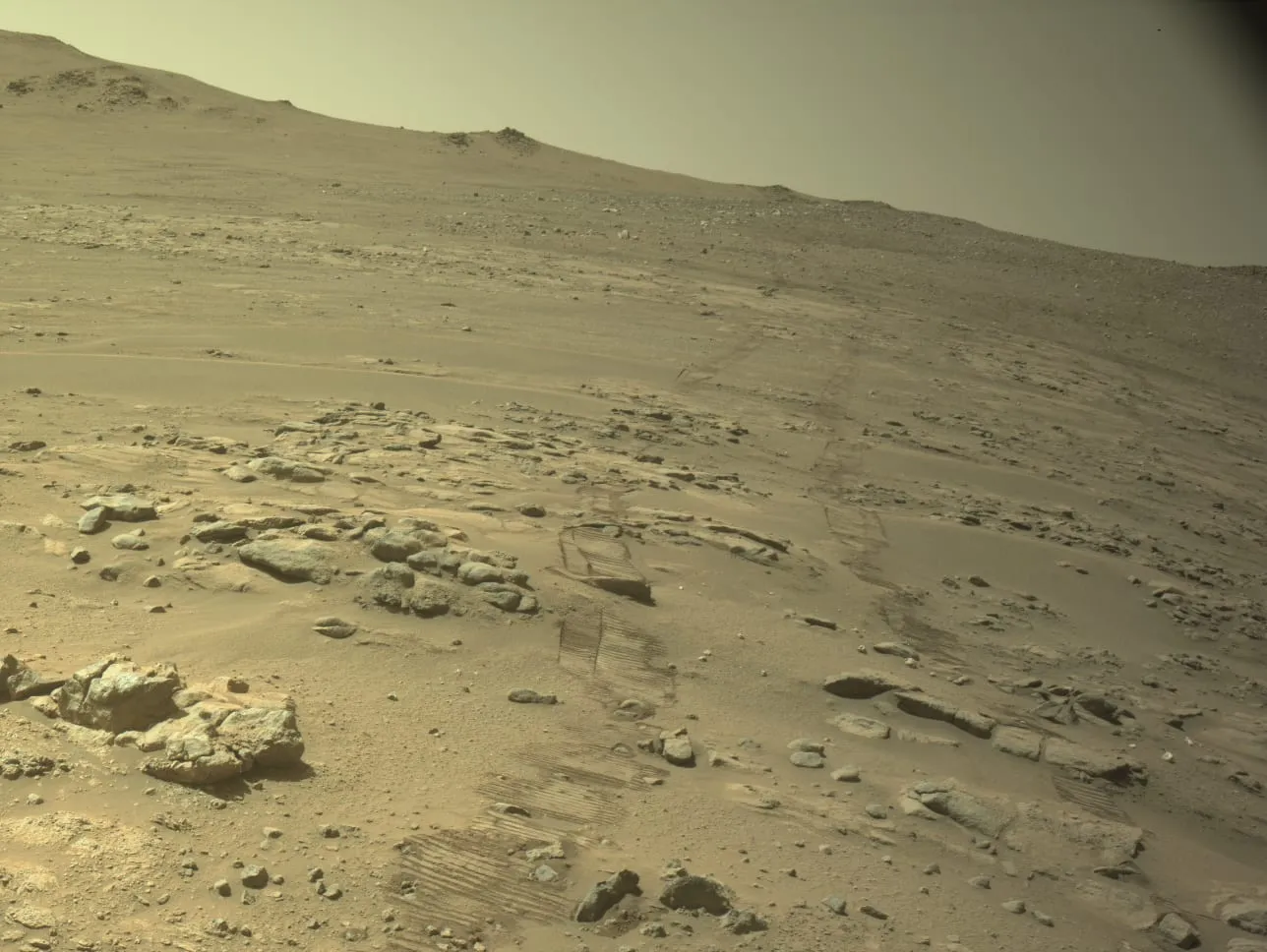
On 11 October 2026, NASA’s Perseverance rover drove past the previous record. Its odometer read 28.10 miles, or 45.22 km, in total distance driven on Mars. The previous record, set by the Opportunity rover, was 28.06 miles, or 45.16 km. The margin is small. The record is not.
NASA’s Jet Propulsion Laboratory announced it on 12 October, and it is the farthest any vehicle has driven on the surface of another world. The milestone came on the 2,006th Martian day of the mission.
Two rovers, two ways of driving
Opportunity needed roughly 15 years to cover the distance that Perseverance covered in about five and a half. That difference is mostly about how each rover was driven, not how fast it was.
Opportunity was driven almost entirely from Earth. Engineers planned each short drive, sent it up, and waited for the rover to report back. JPL says that autonomous navigation accounted for about 5 percent of Opportunity’s distance and for about the same share of its twin Spirit’s.
Perseverance works differently. Its AutoNav system images the terrain as it moves, builds a three-dimensional hazard map from what it sees, and plans its own route between waypoints that the team set from Earth. JPL says that autonomy now accounts for more than 90 percent of the distance Perseverance has travelled.
That is the real story here. The record is a navigation record. A rover that can pick its own path across rocks and slopes covers far more ground in a mission than one that has to wait for instructions, and it does so without a team on the other end making every decision.
What the number is compared with
JPL also compared the total with the lunar rovers. Perseverance has now passed the combined total distance of the Apollo 17 crew’s lunar rover and the Soviet Lunokhod 2. Those vehicles are the benchmark most people have in mind when they talk about driving on another world, so passing them is the kind of comparison that makes the record easy to picture.
It is also worth being honest about what the comparison measures. Lunar rovers were driven by people, in one case with a crew on board, for a few months each. Perseverance has been moving across Jezero Crater for years, and its total is a measure of endurance and autonomy together.
The extension
NASA has approved the mission’s first extension, which began in October and runs roughly through the end of 2028. JPL’s project team expects the rover to keep adding to the total for years, which means the record will not stay still.
That is the part of the announcement most worth watching. A distance record is only a snapshot. The useful question is how much ground the rover covers in the next two years, and whether the autonomy keeps doing most of the work as the terrain gets harder.
What to take from it
Driving 45 km is an unusual thing to be proud of on a planet with no roads, but the achievement is not the length of the drive. It is that a machine on another world can read the ground in front of it, decide where to go, and get there without a person in the loop for almost every metre.
Photograph: NASA/JPL-Caltech. Navigation camera image from 11 October 2026 showing the rover tracks from the drive that passed Opportunity’s record.