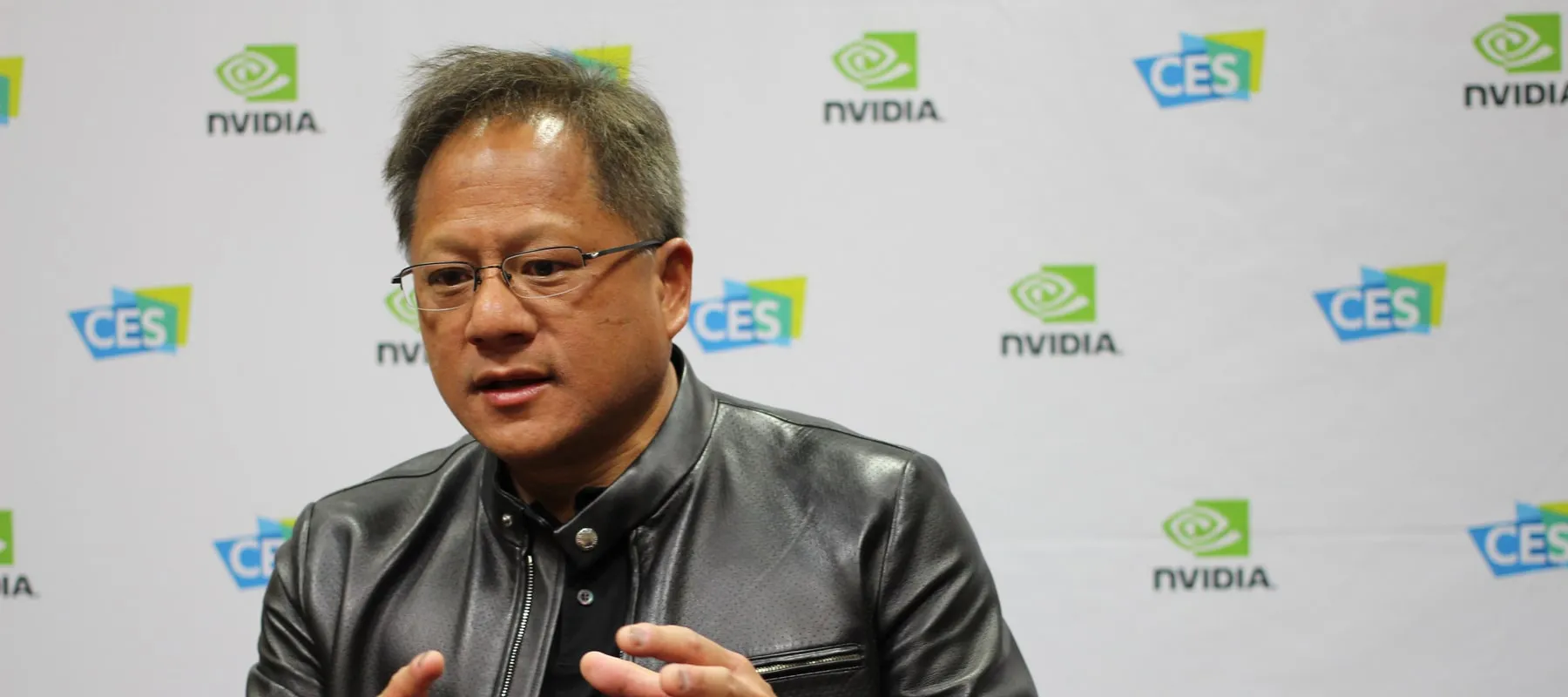
If you have ever run an AI model that you did not train yourself, you have almost certainly pulled it from Hugging Face. It is where open models live. Not one company’s models, everybody’s: Meta’s, Google’s, Mistral’s, Alibaba’s, thousands of fine tunes by people you have never heard of. For most of a decade it has worked the way a public utility works, which is to say nobody thought very hard about who owned it.
On 3 September, Nvidia announced it is buying it.
The numbers
The price is $12,930,300,000, written out to the hundred thousand in Nvidia’s own announcement. The deal is contingent on regulatory approval.
What that buys, in the figures Nvidia gives: more than 18 million developers, researchers and creators, more than 3 million models, 500,000 datasets, 1 million applications and more than 200,000 companies using the platform to discover, evaluate, customise and deploy AI.
For scale, Hugging Face’s last disclosed private round was a $235 million Series C in 2023 led by Salesforce Ventures. TechCrunch reports that the company turned down a $500 million offer from Nvidia last year. A rejected half billion became an accepted thirteen billion in about twelve months, which tells you roughly how the market repriced the thing in between.
The promises
Give Nvidia this much: the commitments in the post are unusually concrete. Jensen Huang wrote them himself, and they are not the usual acquisition mush about synergies. In order:
- Hugging Face will remain an open platform for the entire AI ecosystem.
- Developers will choose the models they want, the frameworks they want, the clouds and inference service providers they want and the computing platforms they want.
- “NVIDIA compute will not be required to build on or deploy through Hugging Face.”
- The platform will keep supporting open source and open weight models from every model builder and keep supporting multi-cloud and multi-accelerator development and deployment.
Nvidia also points out, fairly, that it is already the largest contributor of open models and data to the platform: more than 500 models and more than 250 open datasets. This is not a company that discovered open weights the week it wrote a cheque.
Clem Delangue, Hugging Face’s chief executive, framed it as a resourcing problem. His account is that the open platform needed more compute, more support and more visibility to work at the scale it now has to work at, and that this is why the company went to talk to Jensen in the first place.
The part that is not a mechanism
Here is the thing to hold on to. Every commitment above is a promise made by an owner. Not one of them is a structure that would survive the owner changing its mind.
There is no independent foundation holding the registry. No trust, no golden share, no charter that a future chief executive would have to go to court to unwind. The guarantee that the world’s model registry stays neutral toward hardware is, as of September, a paragraph on a corporate blog signed by a man who sells the hardware.
That is not an accusation of bad faith. Huang’s stated reasoning is coherent and he has been making the open weights argument in public for a while, including in a recent open letter he coauthored. It is a point about where a dependency now sits. Before September, if Nvidia had wanted to make life quietly harder for people deploying on AMD or on Google’s accelerators, it had no particular lever at the registry layer. After September, it owns the registry layer. The promise is that it will not pull the lever. The lever still exists.
What to actually watch
Press releases are not evidence. Behaviour over years is. Three things are worth checking against the promise as this closes and settles:
Does model discovery stay hardware neutral? The ranking, the search, the trending list and the default deployment buttons are the places where a thumb would be invisible on the scale. Nobody would announce a change there.
Do rival vendors keep first class support? AMD, Google, Apple, Qualcomm and the inference providers all publish to Hugging Face today. Watch whether their integrations stay as good as Nvidia’s, or merely stay possible.
Does it stay cheap to leave? The strongest guarantee of neutrality is not a promise, it is a working export path. Weights are files. The healthiest outcome for the open ecosystem is that mirrors and alternative registries get more investment, not less, precisely because the main one now has a corporate parent.
Open models were supposed to be the hedge against a small number of companies owning AI. That hedge has been running, for years, through infrastructure owned by nobody in particular. From September it runs through infrastructure owned by the most valuable chipmaker on earth. The models are still open. The commons is now somebody’s property.
Photograph: Maurizio Pesce, CC BY 2.0. Screenshot: NVIDIA.